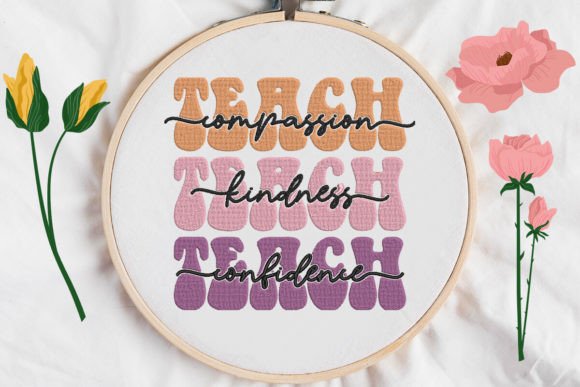
Teach Compassion, Kindness, Confidence Design Review
As an embroidery designer specializing in commercial branding and small business merchandise, I approach every new machine embroidery design with a critical eye toward production viability and brand impact. When reviewing the "Teach Compassion, Kindness, Confidence" design, my primary focus is not just its aesthetic appeal for Back To School projects, but its functional performance as a branding asset for businesses that value community, education, and care. This review evaluates the design through the lens of a professional digitizer and merch creator, assessing how this specific artwork translates from a digital file to a tangible, revenue-generating product.
Visual Personality and Brand Alignment
The first impression of "Teach Compassion, Kindness, Confidence" suggests a narrative-driven aesthetic that balances warmth with authority. For small business owners, particularly those in childcare, tutoring, counseling, or artisanal education sectors, this sentiment is more than a slogan; it is a core value proposition. Visually, designs carrying this message typically utilize a mix of script and block lettering to convey both approachability and structure. From a branding perspective, this duality is essential. It signals to customers that your business is nurturing yet professional.
When integrating this into brand identity, the design serves as an emotional anchor. Unlike generic logos, text-based embroidery with positive affirmations creates an immediate psychological connection with the viewer. For a boutique or creative studio, this design moves beyond simple decoration to become a conversation starter. However, the success of this connection relies entirely on execution. If the lettering is too dense or the spacing is poor, the message becomes illegible, undermining the very confidence the design seeks to project. As a reviewer, I look for clean transitions between text elements and adequate negative space to ensure the design reads clearly at a glance, which is vital for retail environments and social media photography.
Commercial Applications for Small Business Merch
The versatility of "Teach Compassion, Kindness, Confidence" makes it a strong candidate for diverse small business merch lines. In my experience, text-heavy inspirational designs perform exceptionally well when applied strategically across different product categories. Here is how this design functions in real-world commercial scenarios:
- Staff Uniforms and Aprons: For cafes, bakeries, or florists, placing this design on an apron pocket or chest area reinforces company culture. It transforms staff attire into a statement of service quality. The design must be sized appropriately to avoid interfering with pockets or seams while remaining legible from a conversational distance.
- Tote Bag Design: Canvas totes are a staple for markets and boutiques. This design works beautifully as a center-chest or full-front graphic on natural cotton canvas. The texture of the canvas complements the organic feel of the message, making it a high-perceived-value item for customers.
- Embroidered Patches: Creating standalone patches allows for inventory flexibility. You can stock patches separately and apply them to caps, jackets, or backpacks on demand. This design’s thematic elements lend themselves well to merrowed-edge patches that can be sold as add-ons or included as free gifts with purchase to boost customer loyalty.
- Cap Embroidery: Headwear presents unique challenges due to curvature. If using this design for caps, verify that the vertical height fits within the safe embroidery area of your specific cap frame. Centered placement usually yields the best results for multi-line text designs like this one.
Production Considerations and Technical Limitations
While the sentiment is universally appealing, technical constraints dictate where "Teach Compassion, Kindness, Confidence" should be used with caution. As a professional, I must emphasize that not all fabrics or sizes are suitable for detailed text embroidery. Small patch sizes are often the biggest pitfall. If the design contains intricate serifs or thin connecting scripts, scaling it down below 3 inches may result in thread breaks, puckering, or illegibility. Always check the minimum recommended size in the embroidery file metadata before attempting micro-branding.
Fabric texture also plays a massive role in the final output. On smooth cotton twill or denim, the design will likely render crisply. However, on textured fabrics like fleece, terry cloth, or ribbed knits, the stitches can sink into the pile, obscuring the message. In these cases, you must adjust your stabilizer strategy. Using a heavy-weight cutaway stabilizer and potentially a water-soluble topping is non-negotiable to maintain stitch definition. Additionally, consider stitch density. High-density fills on lightweight garments can cause fabric distortion, while low-density fills on dark uniforms may fail to provide adequate coverage. Test runs are mandatory to balance opacity with fabric drape.
Washability is another critical factor for commercial apparel. Items like work shirts and aprons undergo frequent laundering. Ensure the thread colors selected are colorfast and bleach-resistant if intended for healthcare or food service environments. A faded or bleeding design reflects poorly on the business, regardless of how beautiful the original digitization was.
Impact on Customer Trust and Product Value
In the handmade and small business sector, perceived value is directly tied to presentation. A professionally executed "Teach Compassion, Kindness, Confidence" embroidery elevates a basic garment into a premium handmade product. When customers see crisp registration, appropriate stabilizer usage, and thoughtful placement, they subconsciously attribute those same qualities of care and precision to your services. Conversely, poor embroidery suggests negligence.
This design specifically targets trust-building. By wearing or displaying values of compassion and kindness, your business aligns itself with ethical consumerism. For Etsy sellers and craft business assets, this alignment can differentiate your shop in a saturated market. It turns a transactional purchase into a relational one. Furthermore, consistent use of this design across multiple touchpoints—from packaging accents to event merch—reinforces visual consistency. Repetition builds recognition, and recognition builds the confidence necessary for long-term brand growth.
Professional Designer Notes for Implementation
Before loading this digital embroidery file into your machine for a client order or production run, adhere to this professional checklist to ensure commercial-grade results:
- Verify Licensing: Confirm that your purchase includes commercial licensing for branded merchandise. Personal use licenses do not cover selling finished products or using the design for business promotion.
- Create Printable Mockups: Before stitching, use software to generate a printable mockup or digital visualization. Share this with clients for approval regarding size, placement, and thread color matching. This prevents costly rework and ensures expectations are met.
- Test in Black and White: Run a test stitch-out using black thread on white fabric (or vice versa) first. This removes color variables and allows you to inspect the pure structure, spacing, and registration of the design.
- Check Hoop Size Compatibility: Ensure the design dimensions fit comfortably within your hoop with adequate margin for the presser foot. Crowding the hoop leads to tension issues and misalignment.
- Evaluate Thread Contrast: Select thread colors that offer sufficient contrast against the base fabric. Pastel threads on white fabric, for example, may look elegant digitally but disappear in physical form under store lighting.
- Compare Beside Other Assets: Print or stitch a sample and place it next to your existing logo or brand materials. Ensure the style weight and scale feel cohesive rather than disjointed.
- Document Stabilizer Pairings: Once you find the perfect stabilizer and needle combination for this specific design on your target fabric, record it. Consistency in commercial embroidery comes from repeatable processes, not guesswork.
Ultimately, "Teach Compassion, Kindness, Confidence" is a powerful asset for businesses rooted in service and community. By treating it with technical respect and strategic intent, you transform a simple embroidery pattern into a cornerstone of your brand's visual and emotional identity. Always prioritize testing and quality control to ensure the finished product honors both the message and your business reputation.